a

a
CLICK PHOTO TO LINK TO OFFICIAL WEBSITE

Disclaimer

DISCLAIMER: It’s important to note that the posts in this page are NOT intended to be a medical reference or to replace professional care during pregnancy, labor, or birth.

Tuesday, 23 July 2013

Father's Support in Making Breastfeeding a Success

Assalamualaikum & Greetings.

How many of you ladies face difficulties to breastfeed/ failed to do so due to lack of surrounding support as a major factor?

For most ladies/mummies, the Husband/Father of the Child is the first line of support.

Do all husbands/fathers support breastfeeding? Some do, some don't & some don't care.


"The most common reasons bottle-feeding was chosen included: 1) mother's perception of father's attitude, 2) uncertainty regarding the quantity of breast milk, and 3) return to work" 
-Major factors influencing breastfeeding rates: Mother's perception of father's attitude and milk supply.Arora S, McJunkin C, Wehrer J, Kuhn P.


"In many families, fathers play a strong role in the decision of whether to breastfeed. Fathers may be opposed to breastfeeding because of concerns about what their role would be in feeding, whether they would be able to bond with their infant if they were personally unable to feed the baby, and how the mother would be able to accomplish household responsibilities if she breastfed" 

-Wolfberg AJ, Michels KB, Shields W, O’Campo P, Bronner Y, Bienstock J. Dads as breastfeeding advocates: results from a randomized controlled trial of an educational intervention. Am J Obstet Gynecol. 2004;191:708–712. [PubMed] 
-Dennis CL. Breastfeeding initiation and duration: a 1990–2000 literature review. J Obstet Gynecol Neonatal Nurs. 2002;31:12–32. [PubMed] 
-Scott JA, Binns CW. Factors associated with the initiation and duration of breastfeeding: a review of the literature. Breastfeeding Rev. 1999;7:5–16. [PubMed]

The articles listed above are evidence-based facts with regards to how important a father's role is to make breastfeeding a success. So how can fathers participate?

1. Attend antental/breastfeeding classes with your preggy Mrs, and gain knowledge on breastfeeding.

2. Take part in choosing breastfeeding equipments with your partner/wife. That way, you will learn more about the equipments and be able to assist her when the time comes.

3. If possible, assist your partner/wife during labour so that she is more calm and will be in a steady state of mind to breastfeed later :-)

4. Upon delivery (if in hospital), help your wife to remind healthcare staffs that she wants to fully breastfeed and insist on early skin to skin contact for mother and baby. (Fathers should practice skin to skin contact as well to promote bonding).

5. At home, you can help your partner/wife handle the baby (eg change diapers, bathe, burp) so that your partner/wife can take a nap, pump milk, bathe and etc..
6. Wake up with your partner/wife for night feedings. Keep her company while she is breastfeeding, get a warm drink for her while she is pumping/feeding. A relaxed mind with help a mother's milk supply tremendously.

7. You can participate in feeding by warming up expressed breastmilk and giving cup/syringe feeding to your baby.
8. You can help massage your partner/wife's back to ensure her milk ducts open and milk flows smoothly.

9. You can help with breast issues like engorged breast by soaking hot towels for your wife to compress.

10. Show her love, care & gratitude for carrying your little one in the womb and for feeding your little one!

Thursday, 13 June 2013

Do Not Shake Breastmilk

Don't Shake the Milk

Linda J. Smith, BSE, FACCE, IBCLC
Why not?
Because shaking expressed mothers' milk (or boiling or freezing it) denatures the shaped molecules of the protective proteins, leaving only the pieces - the amino acids - the parts. Lactoferrin, lysozyme, and other protective components work their protection magic when they are in their original shaped molecular structure. Some components remain intact, even during freezing, shaking or heating. They not only protect the gut from many kinds of infection, but also prevent inflammation of the gut lining. Even broken up, the separate amino acids are still really good stuff and are digested by the baby as nutrients.
Imagine a set of pop-beads assembled into a necklace or bracelet. When the beads are acting as a bracelet or necklace, they are doing their job as protective elements. When you break apart the beads, you have in your hand many individual chunks of amino acids which are then digested.
Cellular components are also susceptible to damage by physical stress. After all, they are living cells.
With mother's milk, you get at least two functions for the price of one. With manufactured formula, you only get the individual beads, never the necklace or bracelet. And never the living cells.
So, please handle human milk gently, respectfully and kindly. It's far more than perfect food for babies - it's a living tissue and protective shield too.
© 1998 Linda J. Smith, BSE, FACCE, IBCLC

Sunday, 9 June 2013

Breastfeeding during Ramadhan Al-Mubarak


AssalamualaikumMummies.

Favourite month of the year is just around the corner.
 
Last year, my baby was merely 8 months during Ramadhan and I was exclusively pumping for her breastmilk. My breastmilk stock wasn't so great at that time and was just starting to collect stock in our newly bought deep freezer.

As many mothers out there, I was indeed worried about my milk supply declining since my supply had just stabilized at that point of time. I am aware that there are exclusions for breastfeeding and pregnant mothers with regards to fasting, but am not going to write about the details and depths on that in this post (I'd rather leave it to the experts) :-)

What I am going to write about is my experience during last Ramadhan and some factual details on how a mother's diet effects her breastmilk production.

Alhamdulillah, I only missed 1 day of fasting last year due to mastitis (had to take anti-pyretics, couldn't stand the chills and pain). The first day of fasting, my breastmilk supply dropped. A bit panicked, I continued to drink lots of water (more than I need I think) after breaking fast and stuffed myself with whatever food that is said to be `Milk Boosters'. Next day, breastmilk supply dropped even more. I still wanted to fast though. Alhamdulillah, I googled and came across an article that denies my paranoia and mindset that if I fast, my breastmilk production would decrease. Next day, during sahur, I ate as usual (moderately) and didn't stuff myself with water :-) Guess what? Milk production increased! And it was just stable during the whole fasting month, Alhamdulillah. So it's all in the mind :-)


To support my story, here are some facts from trusted resources about mother's diet & breastmilk production.

Breastfeeding mothers need proper nutrition to:
1. Maintain quality of milk
2. Recovery after delivery
3. Maintain mother's health

Fat deposition @ pengumpulan lemak during pregnancy is meant to assist breastmilk production during the breastfeeding period. Breastmilk is produced partly from maternal fat deposit and partly from mother's food intake.


Significant decline in breastmilk production only happens in cases of SEVERE MALNUTRITION.
In those cases of severe food intake deprivation, body produces breastmilk mainly from maternal fat stores. In SEVERE MALNUTRITION, the quantity of breastmilk and quantity of fat in breastmilk might be reduced BUT the breastmilk still has it's vitamins and qualities.


So, in conclusion, approximate 14 hours of fasting has been proven scientifically that it will not affect breastmilk production.What affects breastmilk production is mothers feeling tired, weary, worried or stressed during fasting hours.

So how to maintain breastmilk supply during Ramadhan?

Dua,
Eat & Drink well from Dusk till Dawn (no need to overdo it),
Supply vs Demand Concept (continue Breastfeeding / Pumping often)
Try to get enough rest.
If need so, take supplements or whatever food that boosts your energy :-)
Lastly, STOP WORRYING :-)

Lots of Love :-)


Baby Friendly Hospitals


Want to have efficient support for breastfeeding right from the first moments of your precious little one is born? If you're planning to have a hospital birth, I suggest you do so in a Baby Friendly Hospital.
What is a Baby Friendly Hospital?

According to standards set by Unicef and the World Health Organisation, hospitals must fulfill ten criteras to gain baby-friendly accreditation. They must:
  • Have a written breastfeeding policy that is routinely communicated to all healthcare staff.
  • Train all healthcare staff in skills necessary to implement this policy.
  • Inform all pregnant women about the benefits and management of breastfeeding.
  • Help mothers initiate breastfeeding within half an hour of birth.
  • Show mothers how to breastfeed and maintain lactation, even if they are separated from their infant.
  • Give newborn infants no food or drink other than breastmilk, not even sips of water, unless medically indicated.
  • Practice rooming in. This means keeping mothers and their babies together at all times.
  • Encourage breastfeeding on demand.
  • Give no artificial teats or pacifiers to breastfeeding infants.
  • Foster the establishment of breastfeeding support groups and refer mothers to them on discharge from the hospital or clinic. Unicef
Only hospitals that fully comply with these criteria will be certified as baby friendly hospitals. In 1998, Malaysia was the third country in the world, after Sweden and Oman, to have all its government hospitals certified baby-friendly. A number of private hospitals in Malaysia have also been awarded the baby-friendly hospital status and more are preparing for this accreditation process.

Saturday, 8 June 2013

Nursing Strike

 
Probably some mothers would have experienced this alarming situation when baby refuses to breastfeed.
Here is an interesting and informative article..

Nursing strike


by Natalie Walker Whitlock
Reviewed by the BabyCenter Medical Advisory Board
 

What is a nursing strike?

A baby who refuses to breastfeed (and is not in the process of being weaned) is said to be on a "nursing strike." A nursing strike is your baby's way of telling you that something's wrong. And it'll probably take a little detective work to figure out the problem.

What causes it?

Here are some reasons your baby may go on a nursing strike:
  • Mouth pain from teething, a cold sore, or an infection (such as thrush)
  • An ear infection, which may cause pressure or pain while nursing
  • A cold or stuffy nose, which can make breathing difficult while nursing
  • Reduced milk supply or a slow letdown
  • A major disruption in your baby's nursing routine or schedule
  • If your teething baby has bitten you and your reaction startled him, he may be afraid to nurse after that.
  • A change in soap or other toiletry that causes you to smell different to your baby
  • A change in the taste of your milk, caused by a vitamin or drug or by hormonal changes (from pregnancy or your period, for example)

What can I do?

A nursing strike can be tricky for even the most dedicated breastfeeding mother. With patience and support, though, you can get through it.
A nursing strike usually lasts between two and five days, but it can go on longer. While you continue to encourage your baby to nurse, you'll need to pump (or express your milk by hand) every few hours, or about as often as your baby had been nursing. This will help keep up your milk supply, prevent plugged ducts and engorgement, and provide your baby with the milk he needs. You can offer the expressed milk in a sippy cup, a bottle, a spoon, an eyedropper, or a feeding syringe.
Here are some ways to overcome a nursing strike:
  • Try nursing when your baby is very sleepy. Many babies who refuse to nurse when they're awake will breastfeed when they're sleepy.
  • Visit your baby's doctor to rule out medical causes (such as an ear infection or thrush) and seek feeding advice.
  • Vary your nursing position. (Your baby may be more comfortable in one position than another.)
  • Nurse in motion. Some babies are more likely to nurse when you rock or walk them than when you're sitting or standing still.
  • Nurse in an environment that's free from distractions. It's common for a 6- to 9-month-old to go on a nursing strike as he becomes more aware of the world. Babies this age are easily distracted and often prefer to "snack" at the breast instead of settling down for a meal. Try nursing in a dimly lit, quiet room, away from the sound of the radio or television.
  • Give your baby lots of skin-to-skin contact (try nursing without a shirt on or in a warm bath). A sling or carrier can help keep your baby close between nursing attempts.
It's easy to jump to the conclusion that a baby who doesn't want to nurse is weaning himself. But it's unlikely that a baby under a year old who has been successfully breastfeeding is ready to give up nursing. (An older baby may cut back in reaction to a new pregnancy, though.)

Will it affect my baby?

A nursing strike can be upsetting for your baby as well as for you. Try to keep other elements of your baby's routine as normal as possible during the strike. Give him extra attention and physical contact.
If you're worried that your baby isn't getting enough food, keep track of wet diapers. At least five to six wet disposable diapers per day – or six to eight cloth diapers – indicates that he's taking in enough fluid. (Disposable diapers are so absorbent that you may not notice every time he urinates.)
Don't hesitate to call the doctor if you're worried.

Can I still nurse?

Absolutely. It's important to keep trying to nurse your baby. With patience and persistence you should be able to get back to your breastfeeding routine.

Thursday, 6 June 2013

Breastfeeding Myths

Breastfeeding Myths
   To mothers out there, breastfeeding or not, it is my obligation to spread the word of truth on breastfeeding so that you get a clear picture with regards to breastfeeding. Words of myth are spread throughout, in every community, every region and every country. The latest and funniest I’ve heard by far is from a friend who claimed that her grandmother told her this:
‘ Whenever you breastfeed your baby, feed the right breast first, then the left. This is because the milk from the right breast represents rice and the milk from the left breast represents water’.
Such statement might not make sense for mothers who are well-educated on breastfeeding but might affect the mind of some young mothers who are ignorant on breastfeeding, hence giving them unnecessary pressure to make sure they synchronize the feeding according to the proper order of which breast to feed first.
I would love to share a few famous breastfeeding myths in relation to Dr. Jack Newman’s article on Breastfeeding Myths.                                                                 

1. Many women do not produce enough milk.
Not true! The vast majority of women produce more than enough milk. The usual reason that the baby does not get the milk that is available is that he is poorly latched onto the breast. This is why it is so important that the mother be shown, on the first day, how to latch a baby on properly, by someone who knows what they are doing. 

2. It is normal for breastfeeding to hurt.
Not true! Though some tenderness during the first few days is relatively common, this should be a temporary situation which lasts only a few days and should never be so bad that the mother dreads nursing. Causes of breast or nipple pain include poor baby latching, yeast infection, plugged ducts and many others. Please consult a physician if you experience prolong breast or nipple pain.

3. There is no (not enough) milk during the first 3 or 4 days after birth.
Not true! It often seems like that because the baby is not latched on properly and therefore is unable to get the milk. Once the mother's milk is abundant, a baby can latch on poorly and still may get plenty of milk. By not latching on well, the baby is unable to get the mother's first milk, called colostrum. Anyone who suggests you pump your milk to know how much colostrum there is, does not understand breastfeeding, and should be politely ignored. 

4. A baby should be on the each side of the breast for a certain amount of time.
Not true! A distinction needs to be made between "being on the breast" and "breastfeeding". If a baby has latched on properly and drank sufficiently on the first breast, it is not necessary for he/she might to drink from the other side.

5. A breastfeeding baby needs extra water in hot weather.
Not true! Breastmilk contains all the water a baby needs. 

6. A mother should wash her nipples each time before feeding the baby.
Not true! Formula feeding requires careful attention to cleanliness because formula not only does not protect the baby against infection, but also is actually a good breeding ground for bacteria and can also be easily contaminated. On the other hand, breastmilk protects the baby against infection. Washing nipples before each feeding makes breastfeeding unnecessarily complicated and washes away protective oils from the nipple.

7. Pumping is a good way of knowing how much milk the mother has.
Not true! How much milk can be pumped depends on many factors, including the mother's stress level. Babies are the best pump!

8. Breastfeeding ties the mother down.
Not true! A baby can be nursed anywhere, anytime, and thus breastfeeding is liberating for the mother. No need to drag around bottles or formula. No need to worry about where to warm up the milk. No need to worry about sterility. No need to worry about how your baby is, because he is with you.

9. There is no way to know how much breastmilk the baby is getting.
Not true! There are ways to measure if your baby is getting enough such as urine output and colour, stool consistency, weight gain and many more.

10. Modern formulas are almost the same as breastmilk.
Not true! There is no duplicate for God’s natural gift for babies.

11. If the mother has an infection she should stop breastfeeding.
Not true! The baby's best protection against getting the infection is for the mother to continue breastfeeding. If the baby does get sick, he will be less sick if the mother continues breastfeeding. Besides, maybe it was the baby who gave the infection to the mother, but the baby did not show signs of illness because he was breastfeeding. Also, breast infections, including breast abscess, though painful, are not reasons to stop breastfeeding. Indeed, the infection is likely to settle more quickly if the mother continues breastfeeding on the affected side. 

12. If the baby has diarrhea or vomiting, the mother should stop breastfeeding.
Not true! The best medicine for a baby's gut infection is breastfeeding. Stop other foods for a short time, but continue breastfeeding. Breastmilk is the only fluid your baby requires when he has diarrhea and/or vomiting, except under exceptional circumstances. The push to use "oral rehydrating solutions" is mainly a push by the formula (and oral rehydrating solutions) manufacturers to make even more money. The baby is comforted by the breastfeeding, and the mother is comforted by the baby's breastfeeding. 

13. If the mother is taking medicine she should not breastfeed.
Not true! There are very few medicines that a mother cannot take safely while breastfeeding. 

14. A breastfeeding mother has to be obsessive about what she eats.
Not true! A breastfeeding mother should try to eat a balanced diet, but neither needs to eat any special foods nor avoid certain foods. A breastfeeding mother does not need to drink milk in order to make milk. A breastfeeding mother does not need to avoid spicy food.

15. A breastfeeding mother has to eat more in order to make enough milk.
Not true! It is commonly said that women need to eat 500 extra calories a day in order to breastfeed. This is not true. Some women do eat more when they breastfeed, but others do not, and some even eat less, without any harm done to the mother or baby or the milk supply. The mother should eat a balanced diet dictated by her appetite. Rules about eating just make breastfeeding unnecessarily complicated.

16. A breastfeeding mother has to drink lots of fluids.
Not true! The mother should drink according to her thirst. Some mothers feel they are thirsty all the time, but many others do not drink more than usual. The mother's body knows if she needs more fluids, and tells her by making her feel thirsty.

17. A mother who bleeds from her nipples should not breastfeed.
Not true! Though blood makes the baby spit up more, and the blood may even show up in his bowel movements, this is not a reason to stop breastfeeding the baby. The mother should breastfeed! If bleeding does not stop soon, the source of the problem needs to be investigated, but the mother should keep breastfeeding.

18. Premature babies need to learn to take bottles before they can start breastfeeding.
Not true! Premature babies are less stressed by breastfeeding than by bottle feeding. A baby as small as 1200 grams and even smaller can start at the breast as soon as he is stable, though he may not latch on for several weeks.

19. Babies with cleft lip and/or palate cannot breastfeed.
Not true! Some do very well. The baby's ability to breastfeed does not always seem to depend on the severity of the cleft. Breastfeeding should be started, as much as possible, using the principles of proper establishment of breastfeeding. If bottles are given, they will undermine the baby's ability to breastfeed. If the baby needs to be fed, but is not latching on, a cup can and should be used in preference to a bottle.

20. Women with small breasts produce less milk than those with large breasts. 
      Nonsense!
Breasts come in various shapes & sizes but all are made with lots of structures to produce breastmilk beneath!

21.Breastfeeding babies need other types of milk after 6 months.
Not true! Breastmilk gives the baby everything there is in other milks and more. Babies older than 6 months should be started on solids mainly so that they learn how to eat and so that they begin to get another source of iron, which by 7-9 months, is not supplied in sufficient quantities from breastmilk alone. Thus cow's milk or formula will not be necessary as long as the baby is breastfeeding.

22. Breastfeeding mothers' milk can "dry up" just like that.
Not true! Or if this can occur, it must be a rare occurrence. Stick to the rule of `Supply vs Demand’ where you should keep on breastfeeding and pumping. The more you express or breastfeed; more milk will come. 

23. Physicians and paediatricians know a lot about breastfeeding.
Not true! Obviously, there are exceptions.

24.Breastmilk given with formula may cause problems for the baby.
Not true! There is no reason that breastmilk and formula cannot be given together. 

25. There is no such thing as nipple confusion.
Not true! Babies who are bottle-fed at a very young age even before they are familiar with the breast might not want to latch on mother’s breast because the flow of the artificial nipples are much faster that natural flow from the mother’s breast. Hence, the baby has to work harder to in order to drink. Cup feeding is an alternative to avoid nipple confusion.

26.Women with flat or inverted nipples cannot breastfeed.
Not true! Babies do not breastfeed on nipples, they breastfeed on the breast. Though it may be easier for a baby to latch on to a breast with a prominent nipple, it is not necessary for nipples to stick out. Breasts change in the first few weeks, and as long as the mother maintains a good milk supply, the baby will usually latch on, sooner or later. 
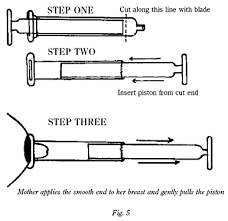
Mummies with inverted or flat nipples can ease latching with this method


27. A woman who becomes pregnant must stop breastfeeding.
Not true! If the mother and child desire, breastfeeding can continue. There are women who continue nursing the older child even after delivery of the new baby. Many women do decide to stop nursing when they become pregnant because their nipples are sore, or for other reasons, but there is no rush nor medical necessity to do so. In fact, there are often good reasons to continue. The milk supply may decrease during pregnancy, but if the baby is taking other foods, this is not a problem.

28. If a mother has surgery, she has to wait a day before restarting nursing.
Not true! The mother can breastfeed immediately after surgery, as soon as she is up to it. Neither the medications used during anaesthesia, nor pain medications nor antibiotics used after surgery require the mother to avoid breastfeeding, except under exceptional circumstances.

29. A mother whose breasts do not seem full has little milk in the breast.
Not true! Breasts do not have to feel full to produce plenty of milk. It is normal that a breastfeeding woman's breasts feel less full as her body adjusts to her baby's milk intake. This can happen suddenly and may occur as early as two weeks after birth or even earlier. The breast is never "empty" and also produces milk as the baby nurses.

30. Breastfeeding in public is not decent.
Not true! Mothers have all the right to provide the best for their babies anytime, anywhere.

31. If the baby is off the breast for a few days (weeks), the mother should not restart breastfeeding because the milk sours.
Not true! The milk is as good as it ever was.

33. Breastfeeding is blamed for everything.
True! The toughest obstacle of breastfeeding is the uncooperative people that you might encounter. Stay strong, for you and the baby!